With the recent threats of attack against the city relegated to little more than rumor, I head back to Fasher to resume our programming. I do so after many checks with resident organizations that it is safe to return to the area.
The most important barometer of relative stability, the city's marketplace, is bustling with people and so I return cautiously optimistic that I will have the right environment in which to get our work done.
It has been interesting to see that Sudan barely registers in the international press especially against such headliners like the Chinese earthquake, Myamar typhoon, and Beirut clashses, but that is to be expected I supposed. Everything seem far more news worthy when you are in middle of the events as they unfold.
The city of Fasher is engaged in an ambitious rewiring project to compensate for the sharp increase in residents needing power. My neighborhood is close to the firing range as I mentioned in previous posts. That is because the city is expanding exponentially. The firing range had been built nearly a mile from the city center. It is the city that has come to rest on its perimeter and not the result of bad planning or indifference on the part of the military. Just thought I should make that note for balance.
While the rewiring process continues, our office and many others have been affected. No power for four days. I hope that five days is the charm. Still no generator and I do not anticipate that we will get one for another month at the rate at which my organization is moving. Temperatures are now averaging 100 degrees each day. My dad would probably say that is nothing compared to his desert abode where temperatures linger at 107 for months, but without air conditioning, swamp coolers, or even an operating fan, it can make sleep a pretty elusive thing. And 100 degrees is only the beginning. I have been told that 115 is not uncommon in Khartoum. I am hoping that Darfur is a tad cooler. In the meantime, it is all about keeping focus on the mind and letting go of any resistance to my new environment. Embracing the heat as it were.
More later when I get settled in.
Monday, May 19, 2008


Saturday, May 17, 2008
Back in Khartoum
I managed to catch a flight back to Khartoum for a pow-wow with the admin and program heads about the way forward in the current climate.
El Fasher is in good shape with the rumors of an imminent attack falling away shortly after UN declared the immediate crisis to be over and lifting the curfew. Hard to make sense of it all. But at least life in the city is returning to a cautious normal state. The market reopened today and the tensions have dropped considerably. Was all this tension caused by the UN report of an imminent attack? Really hard to say. But increasingly, the public is very sensitive to reports coming from international organizations. The market is a very volatile place and I am sure that it picked up on United Nations Peacekeeping chatter as much as anyone.
Still, we are watching the situation carefully to determine whether it is safe to return to the field. The government maintains restrictions on any UN flight to Fasher, to keep UN staff safe given the UN prediction of an imminent attack.
I am just happy that there was no attack and that everyone is okay there. No one wants to see an attack on any Sudan cities. Urban warfare just takes too many innocent lives. All of us want the fighting to stop period. No matter which side is at fault.
I hope to get a clearer picture of my potential return to the field soon. In the meantime, we are not going to make any rash decisions based on posturing between the UN and the government.
Peace to you all.
El Fasher is in good shape with the rumors of an imminent attack falling away shortly after UN declared the immediate crisis to be over and lifting the curfew. Hard to make sense of it all. But at least life in the city is returning to a cautious normal state. The market reopened today and the tensions have dropped considerably. Was all this tension caused by the UN report of an imminent attack? Really hard to say. But increasingly, the public is very sensitive to reports coming from international organizations. The market is a very volatile place and I am sure that it picked up on United Nations Peacekeeping chatter as much as anyone.
Still, we are watching the situation carefully to determine whether it is safe to return to the field. The government maintains restrictions on any UN flight to Fasher, to keep UN staff safe given the UN prediction of an imminent attack.
I am just happy that there was no attack and that everyone is okay there. No one wants to see an attack on any Sudan cities. Urban warfare just takes too many innocent lives. All of us want the fighting to stop period. No matter which side is at fault.
I hope to get a clearer picture of my potential return to the field soon. In the meantime, we are not going to make any rash decisions based on posturing between the UN and the government.
Peace to you all.
Wednesday, May 14, 2008
Tensions continue to mount but mostly below the surface
Khartoum returned to 'normal' or however close to normal one can return after the scene that unfolded on May 11 and 12. The sights and sounds were captured on the international press from BBC to Al Jazeera. [Click HERE and HERE for videos for biased but colorful Al Jazeera coverage] So I assume you have seen the helicopter gunships firing rockets into the most densely populated areas of the city because that is the area from which JEM chose to launch their attack.
 Discussions with Darfurians about the attack and the act of war in an dense urban setting have been revealing. Some will tell you that the government is at fault for firing at a group that was only going to attack selected targets. Others will tell you that the government has not gone far enough to secure the city from further attacks. President Bashir addressed the nation today to let the armed forces and residents of Khartoum how much he appreciated their resolve and ability to thwart this attack against them. It was an invigorating speech but did not reveal the next step for this nation. See excerpts of the speech here
And the fact that we still do not know what is to come has all the NGOs here preparing for the worst. Well, almost. The worst would be full scale war and evacuation to another country to sit it out. Most here do not expect the situation to be quite so bad. Even if there is an escalation, most do not expect to be without access to food or water for more than a few days, so people are stocking up. The price of bottled water in town jumped a few Sudanese pounds and my usual go-to-guy would not budge on the new price. I have a laundry list of products to buy tomorrow in case it does indeed come to sitting in a compound for a week waiting this thing out.
Most NGOs have compounds (joint office and residence) or group homes, so the thought of 'hibernation' - the term of art used to describe the decision to remain in place until the storm has passed - is not quite so bad. I do not know if the experience is quite so appealing to do the waiting alone. At least I have neighbors who could be a source of company if the waiting gets lonely.
I have managed to secure a ticket to fly to Khartoum this weekend, so I will be able to leave Darfur to get some perspective and then return early next week. The program work is really building and we have to keep the momentum going. No plans to put things on hold unless we really need to do so. It is interesting being in this environment where people look at you funny when you ask whether they were thinking about relocating (another term of art meaning getting non local staff out of the city but not out of the country). Most are here with the expectation that there will be violent conflict now and then. The mandatory 2 week rest and relaxation (R&R) breaks every 3 months plus 30 days annual leave is meant to compensate for the added stress.
Cant say if there will actually be a flight this weekend. Lots of flights are being reserved, but cancellations are outside the airline's control for now. So I will just cross my fingers about that possibility and in the meantime focus on work.
Did I mention that it is crazy hot here right now? I wake up with a pool of water in the indentation that my head makes in the pillow. Have to think more seriously about moving one of the swamp coolers into my bedroom.
Hope this entry finds you are well and in good spirits. Despite it all, I am enjoying my time in Darfur and still feel like I have made the right decision to come here.
 Discussions with Darfurians about the attack and the act of war in an dense urban setting have been revealing. Some will tell you that the government is at fault for firing at a group that was only going to attack selected targets. Others will tell you that the government has not gone far enough to secure the city from further attacks. President Bashir addressed the nation today to let the armed forces and residents of Khartoum how much he appreciated their resolve and ability to thwart this attack against them. It was an invigorating speech but did not reveal the next step for this nation. See excerpts of the speech here
And the fact that we still do not know what is to come has all the NGOs here preparing for the worst. Well, almost. The worst would be full scale war and evacuation to another country to sit it out. Most here do not expect the situation to be quite so bad. Even if there is an escalation, most do not expect to be without access to food or water for more than a few days, so people are stocking up. The price of bottled water in town jumped a few Sudanese pounds and my usual go-to-guy would not budge on the new price. I have a laundry list of products to buy tomorrow in case it does indeed come to sitting in a compound for a week waiting this thing out.
Most NGOs have compounds (joint office and residence) or group homes, so the thought of 'hibernation' - the term of art used to describe the decision to remain in place until the storm has passed - is not quite so bad. I do not know if the experience is quite so appealing to do the waiting alone. At least I have neighbors who could be a source of company if the waiting gets lonely.
I have managed to secure a ticket to fly to Khartoum this weekend, so I will be able to leave Darfur to get some perspective and then return early next week. The program work is really building and we have to keep the momentum going. No plans to put things on hold unless we really need to do so. It is interesting being in this environment where people look at you funny when you ask whether they were thinking about relocating (another term of art meaning getting non local staff out of the city but not out of the country). Most are here with the expectation that there will be violent conflict now and then. The mandatory 2 week rest and relaxation (R&R) breaks every 3 months plus 30 days annual leave is meant to compensate for the added stress.
Cant say if there will actually be a flight this weekend. Lots of flights are being reserved, but cancellations are outside the airline's control for now. So I will just cross my fingers about that possibility and in the meantime focus on work.
Did I mention that it is crazy hot here right now? I wake up with a pool of water in the indentation that my head makes in the pillow. Have to think more seriously about moving one of the swamp coolers into my bedroom.
Hope this entry finds you are well and in good spirits. Despite it all, I am enjoying my time in Darfur and still feel like I have made the right decision to come here.
Tuesday, May 13, 2008
Okay, I was way off. Situation definitely becoming worse
Well, I guess it is not always just rumor. Turns out that the rebel groups did indeed attack Khartoum. The situation is fluid. Right now all the airports in Darfur are closed by order of the government, so I am stuck. Not that I would necessarily want to evacuate to Khartoum given its problems over the last few days. In case you missed it all. Here is a a summary of what happened.
April 20 – May 8
JEM and SLA Unity troops reported to be gathering in NNE Darfur. 3-4 columns of rebel troops moved into North Kordofan on May 8 and 9.
Friday May 9 Morning:
Rumours spread of possible coup (rumours reaching UN in NY). Noon: Ministry of Foreign Affairs reports: 3,000 JEM troops are making their way through North Kordofan to Khartoum Arabic-speaking foreigners are reportedly among the JEM force It comprises 4 columns led by Khalil Ibrahim and commander Abdel Ashr The GOS described it as a “suicidal action” SAF has been ordered to confront JEM and block its route – but also to “show restraint” in order to avoid civilian casualties in populated areas They are concerned that JEM will attack cities such as Al Nahud and El Fasher on their return from Khartoum Salva Kiir offered troops to support the GOS, and Minni Minnawi offered information and intelligence Afternoon: Clashes reported between JEM and SAF at Um Qarein in North Kordofan
Saturday May 10 Morning:
Quiet and no incident reported Afternoon and evening:
16:45: Shooting starts in Omdurman between JEM and SAF
17:00: GOS tanks and helicopters deployed from the main airport
17:00-20:00: Three hours of heavy fighting in Omdurman. Two main attacks were launched – one from the north of Omdurman and one from the west of Omdurman.
02:00-04:00 (May 11th): Further shooting reporting west of Omdurman Evening: President Bashir breaks off ties with Chad, and announces that Sudan “reserves the right to respond to attacks”. Sudanese state media announces links between Chad and the rebel attack. Sunday
May 11
Withdrawal of JEM from Omdurman – not known where to, or how many troops. JEM suffered significant losses, including Jamali (JEM Number 2 commander and Khalil Ibrahim’s right hand man) The GOS reports Khalil Ibrahim is wounded and hiding in Khartoum and offers $125,000 reward for his capture
On Sunday night, opposition leader Hassan al Turabi is arrested, along with 5 colleagues from his Popular Congress Party (PCP). Casualties (civilians and armed actors) All information still very much unconfirmed
GOS: Open sources report 10 SAF, 20 police and 20 National Security fatalities
JEM: Reports of around 67 JEM fatalities, 120 arrested and 30 vehicles destroyed. GOS reports between 45-200 JEM killed Civilians: GOS reports 15 civilians killed by JEM (in one attack on a biscuit factory).
Q&A INGO representatives asked UNDSS whether visitors should be advised to travel to Khartoum. UNDSS advised if flights were available, they did not see a problem. INGOs asked for future meetings to discuss how to improve communication and coordination with UNDSS, as focal points have shifted in last few months.
The UNDSS representative flagged some challenges created by the split between UNAMID (covering Darfur) and UNMIS (covering Rest of Sudan). However, a follow-up meeting was agreed.
INGOs asked given the regional factors and implications of this incident (involving Chad, Darfur and Rest of Sudan), how does UNAMID, UNMIS, EUFOR AND MINURCAT exchange information and analysis?
INGOs emphasised need for better information sharing, analysis and contingency planning (eg for staff safety and preparation for population movements/humanitarian needs).
April 20 – May 8
JEM and SLA Unity troops reported to be gathering in NNE Darfur. 3-4 columns of rebel troops moved into North Kordofan on May 8 and 9.
Friday May 9 Morning:
Rumours spread of possible coup (rumours reaching UN in NY). Noon: Ministry of Foreign Affairs reports: 3,000 JEM troops are making their way through North Kordofan to Khartoum Arabic-speaking foreigners are reportedly among the JEM force It comprises 4 columns led by Khalil Ibrahim and commander Abdel Ashr The GOS described it as a “suicidal action” SAF has been ordered to confront JEM and block its route – but also to “show restraint” in order to avoid civilian casualties in populated areas They are concerned that JEM will attack cities such as Al Nahud and El Fasher on their return from Khartoum Salva Kiir offered troops to support the GOS, and Minni Minnawi offered information and intelligence Afternoon: Clashes reported between JEM and SAF at Um Qarein in North Kordofan
Saturday May 10 Morning:
Quiet and no incident reported Afternoon and evening:
16:45: Shooting starts in Omdurman between JEM and SAF
17:00: GOS tanks and helicopters deployed from the main airport
17:00-20:00: Three hours of heavy fighting in Omdurman. Two main attacks were launched – one from the north of Omdurman and one from the west of Omdurman.
02:00-04:00 (May 11th): Further shooting reporting west of Omdurman Evening: President Bashir breaks off ties with Chad, and announces that Sudan “reserves the right to respond to attacks”. Sudanese state media announces links between Chad and the rebel attack. Sunday
May 11
Withdrawal of JEM from Omdurman – not known where to, or how many troops. JEM suffered significant losses, including Jamali (JEM Number 2 commander and Khalil Ibrahim’s right hand man) The GOS reports Khalil Ibrahim is wounded and hiding in Khartoum and offers $125,000 reward for his capture
On Sunday night, opposition leader Hassan al Turabi is arrested, along with 5 colleagues from his Popular Congress Party (PCP). Casualties (civilians and armed actors) All information still very much unconfirmed
GOS: Open sources report 10 SAF, 20 police and 20 National Security fatalities
JEM: Reports of around 67 JEM fatalities, 120 arrested and 30 vehicles destroyed. GOS reports between 45-200 JEM killed Civilians: GOS reports 15 civilians killed by JEM (in one attack on a biscuit factory).
Q&A INGO representatives asked UNDSS whether visitors should be advised to travel to Khartoum. UNDSS advised if flights were available, they did not see a problem. INGOs asked for future meetings to discuss how to improve communication and coordination with UNDSS, as focal points have shifted in last few months.
The UNDSS representative flagged some challenges created by the split between UNAMID (covering Darfur) and UNMIS (covering Rest of Sudan). However, a follow-up meeting was agreed.
INGOs asked given the regional factors and implications of this incident (involving Chad, Darfur and Rest of Sudan), how does UNAMID, UNMIS, EUFOR AND MINURCAT exchange information and analysis?
INGOs emphasised need for better information sharing, analysis and contingency planning (eg for staff safety and preparation for population movements/humanitarian needs).
Friday, May 09, 2008
May update and developments
 Tensions in El Fasher dropped below what the international press would call newsworthy but we saw a continuation of attacks and exchanges of gunfire between government forces in the city center in late April. At one point heavy weapons were used and I spent much of the night consoling my guard whose family lives in the neighborhood where much of the fighting was taking place. But thankfully, while the problem has not been settled, the resolve of the gunmen to use violence to settle the matter has waned and the city is back to its normal state. Khartoum finally made the decision to ship out the soldiers who were at odds with the resident forces and we have not heard any shot since then.
 Hard to believe that this groups, which occupies territory along the Chadian border, is capable of taking on the Sudanese army with its tanks, planes, and soldiers many hundreds of miles across the desert from their main territory. We get security reports fairly often, and we have to decide if they are credible and warrant a cessation of our activities or whether we should just shelve them on the “continue with caution" shelf. For now, I am doing the latter. Fortunately, I am not in Khartoum but I am concerned about this offensive being an excuse to up the level of fighting in Darfur. We have received reports of bombings of villages just north of us. The incidents were limited in scope and in casualties but are worrying nonetheless. I just hope this is not part of a trend that leads to escalation.
 The downside of the influx of indian and Chinese products is that Darfur residents have become consumers and production has dropped to almost nothing. Darfur used to supply meat to all of Sudan. It was also the major source of citrus and other vegetables and fruits. Today, Sudan imports most of its produce and meat. The new oil-based economy has neglected to invest in improving education, building skills for local and international markets, and reducing unemployment. Instead, the new oil wealth is being used to import all its needs. The new imports are cheaper but with the decrease in jobs, who can afford to buy them? It is a dilemma that a few younger businessmen shared with me this morning. Ahmed sells tins of fish, soap, and other small items from a corner shop. He has a university degree in agriculture but sees no future in food production because of the limited market. He is also afraid to venture back into the fields because of insecurity in the area. He is hoping to develop a new skill set and maybe work as a mason or a welder. These two professions are the most profitable today in Darfur, since all construction is either of metal or stone. And as I mentioned earlier, El Fasher is experiencing a construction boom. But Ahmed noted that "the bigger construction projects are being conducted by Chinese and Indian contractors. They use Sudanese labor but do not leave any of their expertise and know-how behind. In the end, the contract is completed to the satisfaction of the owner but it is impossible to repeat the process. The Chinese also often bring in their own labor for the specialized assignments."
I hope to update this blog on the events in Khartoum tomorrow. But it appears that the crisis there is all but over as the government claims to have stopped the rebel advance.
Read this article on the latest - Sudanese army steps up security in the capital
Tuesday, April 08, 2008
Shooting, riots, and getting the job done
 The last three days in El Fasher have been trying. The temperatures climbed above the norm and it has been hard to keep dry no matter how high I turn up the ceiling fan. From time to time, I turn off the fan to catch what I think is gunfire in the not-too-distant areas surrounding our office. But it is usually just the water wagons sounding off in search of customers. The water wagons consist of several used oil barrels welded together, lying horizontal, set on wheels, and pulled by an Arabian stallion. As they make their way through the neighborhoods, they periodically bang on the containers, literally drumming up business.
On April 6, I woke to what sounded like heavy machine gun fire.
I walked outside to gauge the mood in the neighborhood. Everyone seemed calm. Uncaring. So, I assumed that it was the sound of hammers on a nearby construction site. You see, the neighborhood is poor but bustling with new construction. I interpret the new building materials in two ways. The humanitarian community (INGOs and UN) has created a lot more jobs and a market for increased purchasing power. But the fighting has also forced many people to seek shelter with distant relatives, creating a need to build new rooms for the extended house guests. That morning, I found out that the sound was indeed weapon fire from a nearby firing range. Seems the military will be practicing for the rest of the month.
My day only got worse.
My driver came from the market and told me that there was a run on the bank and lots of unsatisfied customers. As we drove through the market past the bank, we noticed that the bank was closing along with neighboring stores. The market was essentially closing down at the peak shopping hours. I called in what I saw to the security tree. Markets don't close unless it is getting too dark or too risky. All along the road, there were dozens of Janjaweed - the Arab militia that the government had recruited to help fight the rebel movements. Most of them were dressed in worn fatigues or in civilian clothing. Everyone seemed to be waiting for something and no one was acting particularly aggressive. But when I arrived at a local government office to discuss our programming, I understood the problem.
The banks were out of money.
I saw a long line of NGO employees complaining that their employer had been late with their payment. Picture 50 men in long flowing white robes, a lawyer, and two labor officers trying to explain that they will each get a chance to file their claim.
When I walked in the door, all the eyes focused on me and someone yelled out the name of the NGO they all worked for. I quickly corrected them and moved passed the edgy crowd. I had business in the office and it could not wait for a quieter moment. I found my appointment contact and we sat down to go over the paperwork. Just 10 minutes later, a loud shot rang out across the valley. The discussions continued but my colleagues started to look nervous. At one point, I suggested we take a break and we all went outside to take stock of the situation. Everyone in the yard was sitting against the 5 foot fence surround the compound and motioned to us to do the same.
A bullet had just hit the outside wall.
The Janjaweed had expected to be paid but since they are not part of the regular army, there is no official payroll and banks do not store funds for non civil servants. When the banks chose to close rather than be forced to pay, the Janjaweed and their allies the Border Guards tried to force their way in. When they failed, they opened fire on civilians in the city to send a message: Janjaweed and Border Guards provide security to the towns in North Darfur; without their cooperation, this is what chaos would look like. The shoot out led to three deaths and a public outcry from the population insisting that the government do more to keep the population safe from brigands.
The shoot out was short lived, but I thought it wise to make it back to the office and sit it out. That evening, the state governor negotiated a settlement with the Janjaweed. He agreed to pay and tensions dropped considerably the following day. There were still more Janjaweed in town than was comfortable, but at least they were getting what they wanted. When I left El Fasher to travel to Nyala, it seemed that things were going back to normal, but at midnight, I received a call from my guard. He does not speak any English and I do not speak Arabic, so the conversation was short. He mentioned the market, something about 30 minutes, something about 8pm, Janjaweed, and that everything was not good. A few follow-up calls revealed that the Janjaweed had engaged in a sustained and then sporadic gun battle with the army in the center of town over night between 8pm and 3am. By the next morning, the two groups had assumed aggressive postures around the market area. I learned that this act had been well coordinated and similar displays were reported in Kebkabiya and in Tawila - two areas west of El Fasher. In both instances, Janjaweed shot in the air in the market and also ransacked the marketplace when the local population complained. This is not a turning point in the war in Darfur. Janjaweed have used this tactic in the past to get an increase in pay. The population has in turned demonstrated in the same way against the use of force in the populated areas of the city and the matter has been laid to rest for another 8 or 9 months. Janjaweed are pro-government militia, so it is unusual to see them at odds with the government but it is not unheard of.
As one Sudanese told me to describe the present situation "when you have a dangerous dog, you can try to direct him to bite your enemy, but in the end, dogs have a poor sense of direction" Or "everyone is your friend when the wallet is full." Quite the philosophers these Sudanese.
I am in Nyala now and far from the wild west show that El Fasher has become. I plan to head back there before I take my R&R in mid April but only if things have calmed considerably.
Thanks for your emails of concern.
Friday, March 21, 2008
Experience of another Nubian knight - good description of the bureaucracy
Diary from Sudan:
" The day starts early, as 46 humanitarians, from the UN and NGOs, board a WFP/UN-AMIS Bombardier plane. For two hours, we cruise West at 24,000 feet over a deserted landscape, and hundreds of miles pass quickly as passengers sleep. There are no signs of life as we fly over the void between Khartoum and Darfur. As we start to descend, dried up stream beds, and the ever changing shades of reddish brown landscape, is finally cut by tracks and then one long straight dirt road. A cluster of round huts, each with its own walled compound, in groups of fifty or more appear, to create a village. Each village is surrounded by rectangles of different shapes. Man's agricultural mark on the land. We fly over village after village, all surrounded by tracks, some near a road, others perched in the middle of nowhere.
People live here because there is water underground, and with water comes life. They have lived here for thousands of years. But no more. Every village is empty, many burned, as every family was swept away by the tragedy that is Darfur. This is a desolate landscape the size of Texas. A place I've heard referred to as a war zone, or the wild-west. It is home to over 2 million displaced people. Now it is very real.
Everything takes time. And time is on the side of the government bureaucracy that regulates humanitarian access within Sudan. To get to Darfur you need a visa from a Sudanese embassy, once in Khartoum you need to get four copies of a HAC authorization each with your picture, copies of your passport and Sudan visa, and, three days in advance, a scarce seat on a UN flight. The Humanitarian Aid Commission, commonly known as the HAC, manages all movements of the humanitarian community. After our flight, within the first hour on the ground in El Fasher, we are off to the HAC office to register. Without proper registration I will be kicked out. I become an employee of my host NGO and everything is fine. Three copies of my HAC authorization are sent to checkpoints throughout the town. I now have authorization to spend time here and explore the Zam Zem IDP camp.
In El Fasher we'll live in a compound with guards. Thankfully near the center of town, away from the occasional gun fights in the market and the GOS (Government of Sudan) garrison near the airport. Our white land cruiser with its tall radio antennae, NGO markings and large flag, cannot stray more than a kilometer from town. The 'no guns aboard' decal and humanitarian markings no longer provide any protection. Land cruisers, with a mounted heavy machine gun, are the ubiquitous weapon of this desert war. They are robbed, and drivers often left on the road far rom town, or at times to be killed. NGOs tell their drivers that if they are held up at gunpoint, to simply had over their keys and the vehicle. The GOS accuses NGOs of handing over the keys of vehicles to the rebels.
To get to most IDP camps, especially ones that are far from the three major towns in Darfur (El Fasher, Nyala, and Geneina), you need to travel by helicopter. If the camp is close, a miniature rented, mini van, or horse drawn cart have replaced the white NGO land cruiser. Tomorrow we'll travel south, 15 km to the Zam Zem camp in a dilapidated mini bus. Like all NGOs we do not want to be associated with any armed escort. The Tawila IDP camp 30 km to the west is no longer safely reached by land.
El Fasher has a climate at this time of the year that is perfect, a dry Mediterranean heat that is certainly cooler than Spain in the summer. The town has a new paved main street and there are a few new buildings and a mosque going up. Little else seems to have changed in years. The airport, built by the British when planes first flew over the Sahara, hasn't changed much at all. It looks new at least when compared to the low brick walled homes that line the dusty dirt streets that run throughout the town. El Fasher is a place of contrasts. Like big white, six winged, insects, 18 enormous AMIS and UN helicopters sit on the sand around the airport. Alone and separate, an armed camouflaged GOS helicopter lies waiting. Driving to our compound we pass AMIS armored personnel carriers, horse drawn carts with drivers holding a whip and sitting on two 80 gallon barrels of water, soldiers standing on a land cruiser with a mounted heavy machine gun, goats who claim the road, donkeys some with riders or pulling carts, some simply lost in the traffic of small taxis.
Time is not on the side of the NGO humanitarian worker. Every movement of NGO expatriate staff is regulated and limited by government controls. Their space to work, the 'humanitarian space' that enables a group of people to care for others within a war zone, is getting smaller. Humanitarian space requires some degree of security, not protection from the barrel of a gun, but from the warring sides and a knowledge of the land and respect from its people. With rebel groups and government proxy groups splintered, making ever shifting alliances across the land, groups of armed bandits roam the countryside praying on any convoy. Time is not on the side of the IDPs in this war that has no peace in sight. In the mean time, hopefully, the new UNAMID forces, if and when, they are properly armed and deployed, will bring some semblance of security. One has to remain hopeful.
The internet and the phone lines are down. I'll try to send this off tomorrow."This passage appeared on ReliefWeb - a great website for those looking for a career of cold showers, little pay, long hours, and relative obscurity while pouring your heart and creativity into one of the most challenging and rewarding experiences of your life.
Friday, March 07, 2008
When Good Guys Go Bad
 Time magazine printed an article that presents more nuanced view of the conflict in Darfur. Anyone who has read any of Alex De Waal's books on Darfur knows that the conflict cannot be classified simply as the massacre of Africans by Arabs, but that is the general theme that we seen in public rallies. Maybe it is because it is easier to rally public sentiment around black and white issues rather through a more complete presentation of the facts. This photograph was taken by Yuri Kozyrev / Noor for TIME.
The Enough campaign is as compelling as it is accurate. There have been massacres here at the hands of Arab militia against non-Arab groups, and you will not find many Arab groups among the displaced. But it is important to underscore the fact that the non-Arab groups are also armed and have not simply stood aside and watched their people be marginalized politically and economically by the central state. They have taken up arms, mobilized small armies, and engage regularly in armed skirmishes with the national army and Arab militia groups.
This Time Magazine article is seeking to balance the perspectives on the war and not the change your mind about what is right or wrong about the conflict. Nor does it seek to justify the government's response to rebel attacks. It is not an apologist article. The Save Darfur campaign will tell you that there is no comparison between the government of Sudan forces and the so-called African rebel forces. But in my perspective, war is never clean. There are no good guys.
Please read the article. It reminds me somewhat of what happens to members of racial groups in the US that came together to defend their neighborhoods against racism and oppression. The Italians had their Mafia, Latino gangs keep their women safe from outsiders, African-American gangs started for much of the same reason. Protect the neighborhood from the real threat of outside oppression, violence, and theft. If police refuse to patrol your neighborhoods, you launch your own protection group. You collect funds from your community to keep THEM safe. Talk to the Hmong, Vietnamese, and Laotian groups in Los Angeles and they will tell the same story. They felt exposed as a community. No one seemed to understand their needs. Something had to be done.
Times change and needs change. Groups eventually morph into burdens for their communities rather than assets. Somewhere along the way, members lose their way, the cause is lost, and they start to prey on their own.
Keep this in mind when you read this article. It is not a phenomenon that affects people thousands of miles away from you. It is phenomenon happening right now in your own neighborhood. What are we doing to save our own towns; our own backyard Darfurs?
Monday, March 03, 2008
Beating the heat but digging the warmth.

 I have been lucky so far to avoid moving outside too much in the heat but that will change once we begin making trips to the rural areas of North and South Darfur. There is a constant breeze and last night at around sundown I saw my first clouds in nearly two months. Everyday is a cloudless day. I know that sounds ideal in western terms where we are obsessed with warm sunny days, but here a warm sunny day is overrated and people clamor for shade and the relief and promise that a cloudy sky brings.
 First, it is sandy but not void of water. I am constantly amazed by the relative ease with which people will pour what seems like endless quantities of water on neighborhood trees. Trees usually have small moats around them made of cement or dirt and it is customary to fill them up two or three times a week. Most houses also have a grey-water (used water) trough that leads to the trees adorning the front of their houses. I am not saying that trees abound in Darfur. I am referring to the neighborhoods of Nyala and El Fasher where each street has at least one set of trees planted all around the same time. Ficus trees seem to be a favorite. And they are spoiled rotten.

The roads in town and to many rural centers are paved but are usually covered on either side by the encroaching sand. So in the end, a two lane road becomes a single-laned, narrow path or completely covered in sand. The maintenance required to keep a paved road clear is so high that it is a wonder why the roads are paved at all. Still, it is easier to cross a sandy path with an asphalt foundation than a open wilderness sandy path.
My own residence is located in a quiet neighborhood. The only noises are the kids belting out the national anthem - more of a screaming session than actual melodies but that is normal for early primary school kids, I suppose. We get the periodic calls for prayer now that the nearest mosque has repaired their giant speakers. I mentioned the boys selling water from donkey-drawn carts who tap a slow rhythmic beat to wake up anyone thinking about sleeping in. And then there are my friends the very noisy and nosy birds. Loud chirping and very insistent about inspecting every inch of your personal space.
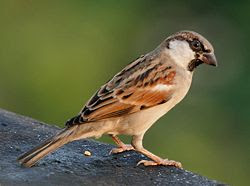 My cousin Vanessa will have a special appreciation for these birds because they are expert spider hunters. If you have a spider in your room, open your door and they will swoop in eat the spider, take down all your cobwebs or spiderwebs, and be off in a flash. Cant explain it. Just saw it with my own eyes on several occasions. I happen to like spiders, so I guess they had better find a better hiding place than my bedroom if they wish to survive. I dont leave my door open too long, for fear of what else these birds may make off with. I guess I could call them sparrows, for the sake of giving you an image of how they look. They just have boom boxes for vocal chords.
None of my streets are paved but everyone has a beautifully decorated brick wall with a cement finishing. Everyone is very cordial. And children run the streets in pack of ten, playing football, heading sheep, or just out and about looking for things to do.
My house is composed of a 10x10 room that stands alone. I have to go outside (shut the door to keep out the birds) and make my way 40 feet to get the toilet and shower units. I have about the same distance to get to the kitchen and I have no sitting room as yet. I do have plans to build a sitting room outside to enjoy the warm starry nights and hold dinner parties with friends. We have a sundown curfew so I do not move around at night, but I do have two guest beds for those wanting to stay later and crash for the night.
The routine so far consists of the weekly meetings with international nongovernmental organizations on various themes. We usually use these opportunities to update one another on developments in the field, populations in need, and security incidents on the road. We have about two or so a week now and I will likely add a few more as we increase our activities and reach.
I also meet with Sudanese organizations to get an idea of the needs in the areas outside Nyala adn Fasher. It is rather tedious so far, and I look forward to visiting some of the discussed communities to get a better sense of the actual needs. Hope that gives you some sense of my physical surroundings and my routine. I will go more into depth on the actual work on my next message.
For now, I just try to stay cool during the day, and soak up the warmth of Sudanese hospitality, which seems to have no bounds.
 My cousin Vanessa will have a special appreciation for these birds because they are expert spider hunters. If you have a spider in your room, open your door and they will swoop in eat the spider, take down all your cobwebs or spiderwebs, and be off in a flash. Cant explain it. Just saw it with my own eyes on several occasions. I happen to like spiders, so I guess they had better find a better hiding place than my bedroom if they wish to survive. I dont leave my door open too long, for fear of what else these birds may make off with. I guess I could call them sparrows, for the sake of giving you an image of how they look. They just have boom boxes for vocal chords.
None of my streets are paved but everyone has a beautifully decorated brick wall with a cement finishing. Everyone is very cordial. And children run the streets in pack of ten, playing football, heading sheep, or just out and about looking for things to do.
My house is composed of a 10x10 room that stands alone. I have to go outside (shut the door to keep out the birds) and make my way 40 feet to get the toilet and shower units. I have about the same distance to get to the kitchen and I have no sitting room as yet. I do have plans to build a sitting room outside to enjoy the warm starry nights and hold dinner parties with friends. We have a sundown curfew so I do not move around at night, but I do have two guest beds for those wanting to stay later and crash for the night.
The routine so far consists of the weekly meetings with international nongovernmental organizations on various themes. We usually use these opportunities to update one another on developments in the field, populations in need, and security incidents on the road. We have about two or so a week now and I will likely add a few more as we increase our activities and reach.
I also meet with Sudanese organizations to get an idea of the needs in the areas outside Nyala adn Fasher. It is rather tedious so far, and I look forward to visiting some of the discussed communities to get a better sense of the actual needs. Hope that gives you some sense of my physical surroundings and my routine. I will go more into depth on the actual work on my next message.
For now, I just try to stay cool during the day, and soak up the warmth of Sudanese hospitality, which seems to have no bounds.
Friday, February 22, 2008
Signs of a new war
... but still taking it one day at a time
The Chadian conflict continues to rage on but with no news headlines and with even fewer witnesses, but we are feeling the repercussions here inDarfur .
The Chadian conflict continues to rage on but with no news headlines and with even fewer witnesses, but we are feeling the repercussions here in
 gun) roaming about town. Both government and SLA-M forces (the only signatory to the now almost defunct peace agreement) regularly cruise the market area in their vehicles and conduct what I assume are armed patrols on foot. To make a point, I should explain that they are all very cordial and never really interact with the population, which is a far better scenario than in
  them. At least in El Fasher and Nyala there are barracks and some division between civilian and military is respected. This is an important point to make because in many African countries in conflict, the government does not provide consistent support to its army; and so on top of the armed conflict between adversaries you also have regular clashes between civilians and the police and military. A culture of predation sets in that creates a confused web of conflict that then becomes difficult to untangle from the original conflict. Peace processes lose their way, and most importantly, lose popular support.
But I digress.

We pulled our taxi to one side to allow the column of military trucks to pass and, after checking in with the UN security office to make sure that the market area was safe, I proceeded to my first meeting of the day. Not two minutes after arriving there, a long column of tanks began to enter the city center. People ran to the streets to watch the 20 or more huge Soviet style tanks roll through with men wearing red bandanas, and waving Sudanese flags and flowers over their heads. “They are returning from Geneina,” a smiling spectator told me. People cheered them o n and showed the “number one” symbol and the joyful soldiers replied in kind. As we both watched this seemingly endless column of vehicles, the same onlooker turned to me and said, “War is horrible and we want this fighting to stop. We hope they are back to stay.” Not two minutes after making this point, he is waving the “number one” symbol again as another tank rolls into view, this one covered in soldiers singing military songs and dancing. One soldier nearly falls off his tank, but still manages to regain his composure and join again in the revelry.
Quite a sight.
It is standard for all NGOs to consult the UN for information about the security situation to ensure the safety of their staff. But when we consulted the UN for some information about what had been happening in town, their response was predictable.
"Nothing to report."
They did not even come to the weekly OCHA meeting later that afternoon because of the lack of relevant security matters to discuss.
Two days later, we all heard the press reports of a large assault on towns north of Geneina (click on the blue text to go the article) and of the arrival of fresh troops in the same area preparing for a sustained attack on the areas abandoned by the Sudanese rebels who had left their hard-fought positions in West Darfur to help their alleged benefactor, President Idriss Deby of Chad, to stay in power. Having abandoned those key positions and leaving the civilian populations totally unprotected, the rebel controlled areas are experiencing a great deal of chaos. Over 15,000 civilians fled the area and crossed in
None of the fighting has directly affected our safety but it does create an unsettling feeling among most international nongovernmental organizations here, especially those who were hoping to start doing early recovery work in settled villages where people have been trying to rebuild. It is very difficult to get a community to start to think about rebuilding, if they believe that there is chance that war will return to their village. So, although the fighting is still hundreds of kilometers away, we can still see its repercussions in the psyche and emotions of the people of North and
We have made adjustments to my living and working situation and I will soon have regular access to the internet in both Nyala and El Fasher, so that is a relief. I should be able to make more regular entries and try to include more descriptions of my environment in El Fasher. I will leave you with this thought.
Recycling the desertEl Fasher and Nyala are towns in the middle of the desert. And things do not decompose very quickly in the desert. I have had to try to find a way to decrease my carbon footprint in this mission by finding creative ways of deposing of my trash. I asked around about any recycling program, and Sudanese just look at me like I am crazy. “We just burn it,” is the usual reply. I began to resign myself to doing the same until I saw this kid collecting plastic bottles in one town, a man collecting scrap metal, and another kid sorting his trash into organic and non-organic material. I managed to follow the scrap metal man to a factory that transforms the scrap into cooking pots and utensils but I still do not know what the kids do with their trash. I personally, think that it would make a very worthwhile side project that perhaps I could encourage you my readers to send ideas and materials on desert recycling and eventually possibly financial support to help these entrepreneurs to create a more formal recycling business.
Trash is a huge source of income in this environment but it has been undervalued for obvious reasons. For inspiration I encourage all of you to watch this film about recycling in
Maa’a Salaama
Tuesday, February 05, 2008
HOT
and GETTING HOTTER
France
 Deby was elected but only after he launched a military coup to overthrow the previous president then lifted term limits when he came to the end of his second term in office. That last maneuver caused massive defections in the army and even some of his own family members took up arms against him.
I cannot help but wonder ifFrance ’s sudden neutrality wasn’t also motivated by the harsh characterization of French nationals in Chad following the episode when a French NGO, Zoë Ark , nearly got away with abducting several hundred Chadian children on the pretense that they were Darfur refugee orphans who needed urgent medical attention in France
 When pressed for the truth, Zoë representatives stated that international law required that they take kids from poor homes where they are suffering and transfer them to better homes where they will be love and cared for. They may have been driven by compassion, but they drove right across a bunch of laws protecting children. In the end, it was proven that the children were not orphans, refugees, sick, or even from
 Darfur , and it was suggested that the children were actually heading for cash-paying, barren French couples. The parents who released control of the children were told that the children were going to get an education, a retreat, or day trip, and would return shortly. The Chadian judiciary worked its magic and sentenced everyone to eight years of hard labor in Chadian prisons. After that episode, it was open season on the French. Anything French was ridiculed, spat upon, and trampled in the streets. Now that Chadians desperately need their help, the French … well … they may just … bide … their … time. France
I spent the first night without worrying about the fact that I do not own a blanket. The weather has decidedly shifted into summer gear and it is easily 80 degrees at midday possibly more. If only I had the weather channel to tell me just hot warm it really is here.

Speaking of temperatures, the conflict in
 Deby was elected but only after he launched a military coup to overthrow the previous president then lifted term limits when he came to the end of his second term in office. That last maneuver caused massive defections in the army and even some of his own family members took up arms against him.
I cannot help but wonder if
 When pressed for the truth, Zoë representatives stated that international law required that they take kids from poor homes where they are suffering and transfer them to better homes where they will be love and cared for. They may have been driven by compassion, but they drove right across a bunch of laws protecting children. In the end, it was proven that the children were not orphans, refugees, sick, or even from
 Well, their reactions have been almost just as contradictory as in the first instance.
First the foreign affairs minister announced that, despite the findings of the UN Security Council,But then, not 15 minutes later, the president of French gave a speech in which he stated that
What will it mean if French decides to throw its weight behind the Chadian government and chase the rebel back across the border into
Maa salaam
Monday, February 04, 2008
Time condensed entries
The streets are bustling with motorized rickshaws or tuk tuks, yellow taxis, a nd lots of donkey or horse drawn flat-bed carts. Over 200 vehicles have been carjacked in the past year, so NGOs no longer drive their signature shiny white land rovers or
It has been cold at night, but the season is due to change in mid-February. Lizards, birds, and ants abound. Cats skirt across backyards belonging to everyone and no one. Hard to explain how such wild cats can be so tame and accustomed to humans. On my way to what has been a long series of meetings with international and local organizations, I met a tiny kitten standing guard in the entrance to the OCHA building. I walked up to it and it did not flinch. (Does he belong to you?) I motioned to the human guard by his side. “No, he is wild, just push him aside,” he replied.
These are not the feral cats I once uncovered under my mother’s house. Maybe the gentle desert breeze brings out another side.
SWEATING DUSTAnything that stands still for more than a few hours here is bound to be covered in a fine film of dust. I mean that quite universally. I learned my lesson when I reached for a Kleenex to cover my sneeze and got a nose full of sand dust that had delicately and invisibly settled on the waiting facial tissue.
That reality may explain why nothing seems to stay in one place for very long here. The political and humanitarian crisis shifts so regularly that it makes it difficult to know if today’s project design will still be valid tomorrow. (A scary prospect when you are charged with designing a regional project). One overarching reality is that areas that are quiet today may become volatile no go zones tomorrow; so, we plan for instability while toiling for sustainable, lasting, foundational peace.
When I come home and get ready for bed, I find that my t-shirt is invariably covered in brown dust, but only on the inside against my skin. I know I am breathing dust. But am I sweating it as well?
A BOY NAMED SKYSitting under a cloudless sky on a very windy but lazy Friday afternoon, reading my Darfur book, two boys around 8 or 9 years of age walk up to greet me. They don’t actually say anything. They just stand there trying not to stare at me perched precariously on the edge of the cement block near my office. I pretend not to see them so that I can finish the paragraph. The sun is really bright today and I am squinting to read from the pages of this paperback by Alex De Waal. Finally I look up and ask the boy “maa ismuka?’ The boy motions that he cannot speak, so I ask again in sign language. I point at him and then move two fingers across my chest. (What is your name?) He smiles, moves two fingers across his chest and points upward (My name is sky).
Friday is a high holy day when everything is closed. Last week the Sudanese government mandated that Friday and Saturday be enforced as the official weekend. The work week is from Sunday to Thursday. This has changed from time to time with combinations of half days and reduced hours and it will most likely change again.
The international community here - organizations and non-governmental organizations alike - generally adhere to this schedule as well. It would be a cardinal sin to disturb someone on a Friday here. Saturdays are generally used to catch up with report writing. But since I arrived in
Tuesday, January 22, 2008
14 photocopies later and I have authorization to travel
Today, Khartoum residents awoke to what I initially thought was a dense fog until one of the other guests at the hotel informed me that it was a mini-Haboob.
Let me explain.
The Haboob is a dust storm that typically consists of windy conditions and a dense cloud of sand dust. So instead of airborne particles of water that create the mist we associate with fog, we get airborne sand. Sound like a housekeeping nightmare? It is. I remember eating sandwiches at the beach as a kid and always finding at least one bit with speckle or two of sand. Imagine that scenario times one thousand. Everything edible really has to be covered, or it will certainly be full of sand. Sand manages to creep in through cracks between the window and the wall, under the door, and every time you enter or exit a building or room. That means that mopping is a constant chore.
 Three years ago, Khartoum was exposed to a centennial Haboob that featured much stronger winds and dumped tons (literally) of sand onto the city. Here is a picture. It is not altered in any way. I am glad that happens only once a century.
Tomorrow I travel to North and South Darfur and I am looking forward to seeing our offices and getting my feet wet.
More news to follow...
Let me explain.
The Haboob is a dust storm that typically consists of windy conditions and a dense cloud of sand dust. So instead of airborne particles of water that create the mist we associate with fog, we get airborne sand. Sound like a housekeeping nightmare? It is. I remember eating sandwiches at the beach as a kid and always finding at least one bit with speckle or two of sand. Imagine that scenario times one thousand. Everything edible really has to be covered, or it will certainly be full of sand. Sand manages to creep in through cracks between the window and the wall, under the door, and every time you enter or exit a building or room. That means that mopping is a constant chore.
 Three years ago, Khartoum was exposed to a centennial Haboob that featured much stronger winds and dumped tons (literally) of sand onto the city. Here is a picture. It is not altered in any way. I am glad that happens only once a century.
Tomorrow I travel to North and South Darfur and I am looking forward to seeing our offices and getting my feet wet.
More news to follow...
Wednesday, January 16, 2008
Sightseeing is over - back to the grind stone
NOT LONG NOW IS THE PATH TO DARFUR
Since my last entry, I have not had a lot of time for sightseeing. It has been work work work to get the program off and running. Lots of paperwork to file to qualify as an organization authorized to operate on Sudanese soil. The authorities has a special office dedicated solely to the management of all the international and national nongovernmental organizations operating in Sudan called the Humanitarian Authorization Commission or HAC. The HAC has put into place an extremely cumbersome series of rules and procedures to regulate everything international NGOs or INGOs do in this country. For instance, how long an INGO can advertise a position and where. HAC officials will inspect the list of candidates and administer their own tests to determine if they are truly qualified and participate in the final decision-making process that determine who your organization will hire.
INGOs must file reports on their activities and accomplishments, explain whether they have departed from their initial plan, and present qualitative or quantitative proof that they have reached their goals. HAC has also required INGOs to reapply for an operating license every year in January, so every year, non-Sudanese staff members are forced to leave their posts and wait in the capital Khartoum until their license is renewed. The process can take as long a month or be over in a matter of days. It all depends of your ability as an organization to follow-up on the paper pushers and have all the forms prepared well in advance.
I applaud the government of Sudan for its efforts or I would, if.....
I was very surprised to see this level of attention from authorities about the work of INGOs. My experience elsewhere in Africa has been that governments could care less about the fate of their citizens let alone the efforts INGOs are making to assist them. If these rules and close scrutiny are meant to ensure that Sudanese citizens are getting the best possible organizations to help them emerge from the current crisis, then I applaud the government of Sudan for its efforts.
For full disclosure, I should point out that some (read many) do not see this "special"attention in such a positive light and believe that the rules and bureaucracy are actually meant to slow down the effectiveness of INGOs and place additional constraints on their ability to operate in the areas of conflict where foreigners (read "witnesses") are not welcome. The same criticism is extended to the rebel groups who also place restrictions on the access of INGOs to cities and villages in areas not under government control.
Not to play devil's advocate (OK, yes, I will), but wouldn't you want your government to have this level of scrutiny if your city or state had over one hundred INGOs from every country imaginable on a mission to save you, your schools, hospitals, farms, children, women, youth, and businesses? I know that the chosen system of accounting here acts more as a hindrance to the operations of INGOs than a facilitation of relief assistance, but I think a middle way is definitely necessary. In fact I think governments should be required to assess and facilitate actively any relief operation, so that they can be directly associated with the recovery of their nation.
What would have happened?
What would have happened had 40 Norwegian, Danish, Dutch, Irish, French, British, Swiss, Australian, Cuban, and Senegalese INGOs flown into New Orleans during the Katrina calamity and rescued all the people, built new housing, provided medical assistance, psycho-social counseling, organized truth and reconciliation commissions to bring unresponsive government agencies to account, and invoked the international criminal court to investigate violation of international humanitarian law? Okay, yes. It would have been great for the people of New Orleans. I know. But think about whether people would feel that they could trust their government to come to their assistance when it was all over.
No.
Confidence in government tends to drop to an all-time low during a major humanitarian operation and that only decreases further the chances for a constructive and inclusive reconstruction period in the post conflict period -- if there is a post-conflict period.
Does that mean that HAC is my new hero? The piles of forms in quadruplicate originals, and quickly developing cramps in my left hand say, eh, no. Not really. Particularly since, for all the surveillance and bureaucracy, there does not seem to be much more than passive interest in whether conditions are actually improving. Now I have only been here for a short while, so I will let you know if my opinion on this point changes. But at this stage, I highly doubt it.
A little cultural note to quench your thirst

Since my last entry, I have not had a lot of time for sightseeing. It has been work work work to get the program off and running. Lots of paperwork to file to qualify as an organization authorized to operate on Sudanese soil. The authorities has a special office dedicated solely to the management of all the international and national nongovernmental organizations operating in Sudan called the Humanitarian Authorization Commission or HAC. The HAC has put into place an extremely cumbersome series of rules and procedures to regulate everything international NGOs or INGOs do in this country. For instance, how long an INGO can advertise a position and where. HAC officials will inspect the list of candidates and administer their own tests to determine if they are truly qualified and participate in the final decision-making process that determine who your organization will hire.
INGOs must file reports on their activities and accomplishments, explain whether they have departed from their initial plan, and present qualitative or quantitative proof that they have reached their goals. HAC has also required INGOs to reapply for an operating license every year in January, so every year, non-Sudanese staff members are forced to leave their posts and wait in the capital Khartoum until their license is renewed. The process can take as long a month or be over in a matter of days. It all depends of your ability as an organization to follow-up on the paper pushers and have all the forms prepared well in advance.
I applaud the government of Sudan for its efforts or I would, if.....
I was very surprised to see this level of attention from authorities about the work of INGOs. My experience elsewhere in Africa has been that governments could care less about the fate of their citizens let alone the efforts INGOs are making to assist them. If these rules and close scrutiny are meant to ensure that Sudanese citizens are getting the best possible organizations to help them emerge from the current crisis, then I applaud the government of Sudan for its efforts.
For full disclosure, I should point out that some (read many) do not see this "special"attention in such a positive light and believe that the rules and bureaucracy are actually meant to slow down the effectiveness of INGOs and place additional constraints on their ability to operate in the areas of conflict where foreigners (read "witnesses") are not welcome. The same criticism is extended to the rebel groups who also place restrictions on the access of INGOs to cities and villages in areas not under government control.
Not to play devil's advocate (OK, yes, I will), but wouldn't you want your government to have this level of scrutiny if your city or state had over one hundred INGOs from every country imaginable on a mission to save you, your schools, hospitals, farms, children, women, youth, and businesses? I know that the chosen system of accounting here acts more as a hindrance to the operations of INGOs than a facilitation of relief assistance, but I think a middle way is definitely necessary. In fact I think governments should be required to assess and facilitate actively any relief operation, so that they can be directly associated with the recovery of their nation.
What would have happened?
What would have happened had 40 Norwegian, Danish, Dutch, Irish, French, British, Swiss, Australian, Cuban, and Senegalese INGOs flown into New Orleans during the Katrina calamity and rescued all the people, built new housing, provided medical assistance, psycho-social counseling, organized truth and reconciliation commissions to bring unresponsive government agencies to account, and invoked the international criminal court to investigate violation of international humanitarian law? Okay, yes. It would have been great for the people of New Orleans. I know. But think about whether people would feel that they could trust their government to come to their assistance when it was all over.
No.
Confidence in government tends to drop to an all-time low during a major humanitarian operation and that only decreases further the chances for a constructive and inclusive reconstruction period in the post conflict period -- if there is a post-conflict period.
Does that mean that HAC is my new hero? The piles of forms in quadruplicate originals, and quickly developing cramps in my left hand say, eh, no. Not really. Particularly since, for all the surveillance and bureaucracy, there does not seem to be much more than passive interest in whether conditions are actually improving. Now I have only been here for a short while, so I will let you know if my opinion on this point changes. But at this stage, I highly doubt it.
A little cultural note to quench your thirst
I will end today's entry with a little cultural note about something you can see everywhere on the streets of Sudan and (or so I am told) in much of the Middle East - free water!!! The stories vary greatly as to why, but many people place ceramic jugs in front of their houses to offer to the public. In some cases, a sign explains that the water is in honor of a relative who has died and those who drink are invited to say a prayer. In other cases, just the act of offering water to the thirsty is a positive karma-building machine. Ceramic pots have micro pores that evaporate tiny amounts of moisture and keep the contents very cool. Imagine 50 degree water in 120 degree heat, and you get the idea. Now, if they would only come up with a ceramic refrigerator, we would reduce our carbon footprint immensely.
Now back to those forms.....
Now back to those forms.....

Saturday, January 12, 2008
Sights and Sounds of Khartoum
Museum hopping and Sufi dancing
I was fortunate to be allowed to join a group of tourists to take in the sites in Khartoum. This was my first opportunity to really see the city and also to learn how Sudanese represent themselves through history, art, and religion.


The first visit to the ethnographic museum was an interesting glimpse into some of the Sudan ethnic groups but the lack of details and informed guides to understand the traditions and practices of the peoples portrayed, I felt like little more than a voyeur. It would have been nice to have at least one person with a vested interest in informing the public of the meaning and purpose of the ethnographic museum other than to say that Sudan has over 500 ethnic groups and 150 languages. Still the display of traditional clothing, pottery, and hunting and fishing tools were interesting. I think you all would appreciate the image of the hippo hunting spear that involved embedding a spear in a heavy object like a trunk of a tree and then releasing it from a limb of a tree to kill a large mammal or stun it long enough to move in to kill it. Really innovative and brutal at the same time. Okay, that may be a boyish thing to have highlighted so I will move on.

We also visited the national museum, which contained a lot of history about Nubian civilization. Egypt is referred to as lower Nubia at times in the same way that Sudan is referred to as upper Egypt in their national museum. I was particularly interested in the transitions from ancient religious practices focused on the Ram god Amon to Christianity and Islam.
The guide underlined several times that Christianity came from the north and not from the south, making direct reference to the long-standing north-south conflict that took on a Islamic north versus Christian south tone as the conflict gained political support from outside interests. Sudan still has pyramids but unfortunately most of its monuments were flooded and submerged when the dam was built on the Nile. Lots of Sudanese tourist visit this free museum and it was heartening to see children reading about their own history with interest and pride. I hope to visit the pyramids from the Kush and Moroe periods on one of my vacation days.
 For a speed session on Sudanese history, I highly recommend a visit to the Republican Palace Museum where the story of Sudanese independence is told with seemingly little attempt to mask the ugly sides of the tumultuous history. The section devoted to the rise and fall of presidents mentions military overthrows in the same breath as college diplomas. It is also a good museum to see some of the gifts that local associations and foreigners have bestowed upon the Sudanese heads of state. If you like cars, a quick tour of the silver shadows (Rolls Royce) of the past presidents is also worth a look. The museum is housed just across from the presidential palace and in an old church that was moved to another location. No mention how you move a church to convert it into a museum, but the curators retained many of the religious references in the building, so it felt respectful of the history of the building as a place of Christian worship.
 The greatest highlight for me was the visit to the Friday sundown Sufi gathering in the older part of the city called Omdurman. The visit began with a drive through a cemetery composed of very shallow graves with makeshift tombstones made of stone, metal, wood, or plastic. When we saw the thousands of these earthen mounds all around the vehicle, conversations in the vehicle ground to a halt. It was hard to believe that we were actually driving into this site. I felt as though I was violating the sanctity of the place just being there. But then further down the road we saw a huge gathering of people in white tunics but also colorful patchwork tunics. These were the members of more than 40 different Sufi sects that make up the dominant religious in Sudan's northern populations. The Sufis are members of an Islamic sect that believes in praising God throughout our lives in thought and in deeds and use music and movement to drill home that realization.
 The Friday sundown event takes place in the middle of this graveyard, bringing up thoughts of our own mortality as the members swayed to the beat of the drums, moving their arms in a pumping motion on either side of their bodies, singing out praise in the same way congregations would yell out "Amen" in a Baptist or AME church. It was really an uplifting environment. It reminded me of the Powwows I have attended in Indiana with the Pottawatomie tribe. At some point, members took off their shoes to dance in the center of the circle that had now become a place of worship. Mosque officials helped to keep the momentum of the energy constantly building by changing the chants and bringing incense for the crowd to cleanse their minds and bodies. The twirling dervishes were less formal or graceful than the ones you may have seen on stage touring the world, but the intensity of their movements and expressions on their faces told me that this was the real deal and not some performance for onlookers. I was approached twice by members of the Mosque asking whether I could feel the rhythm in my heart and whether I wanted to join their group. I just smiled and nodded that I felt it. It was a heady experience. i do plan to go again before I leave Sudan and take more pictures and video of the event. Many people in the crowd also had cameras, so I know that will not be a problem in the future.
Perhaps the most bizarre part of the tour was the sight of the giant egg-shaped 5-star hotel that the Libyans are building in the center of town. It is not yet ready for visiting but I will keep you updated when it is.

Ma'a salaama
I was fortunate to be allowed to join a group of tourists to take in the sites in Khartoum. This was my first opportunity to really see the city and also to learn how Sudanese represent themselves through history, art, and religion.


The first visit to the ethnographic museum was an interesting glimpse into some of the Sudan ethnic groups but the lack of details and informed guides to understand the traditions and practices of the peoples portrayed, I felt like little more than a voyeur. It would have been nice to have at least one person with a vested interest in informing the public of the meaning and purpose of the ethnographic museum other than to say that Sudan has over 500 ethnic groups and 150 languages. Still the display of traditional clothing, pottery, and hunting and fishing tools were interesting. I think you all would appreciate the image of the hippo hunting spear that involved embedding a spear in a heavy object like a trunk of a tree and then releasing it from a limb of a tree to kill a large mammal or stun it long enough to move in to kill it. Really innovative and brutal at the same time. Okay, that may be a boyish thing to have highlighted so I will move on.

We also visited the national museum, which contained a lot of history about Nubian civilization. Egypt is referred to as lower Nubia at times in the same way that Sudan is referred to as upper Egypt in their national museum. I was particularly interested in the transitions from ancient religious practices focused on the Ram god Amon to Christianity and Islam.
The guide underlined several times that Christianity came from the north and not from the south, making direct reference to the long-standing north-south conflict that took on a Islamic north versus Christian south tone as the conflict gained political support from outside interests. Sudan still has pyramids but unfortunately most of its monuments were flooded and submerged when the dam was built on the Nile. Lots of Sudanese tourist visit this free museum and it was heartening to see children reading about their own history with interest and pride. I hope to visit the pyramids from the Kush and Moroe periods on one of my vacation days.
 For a speed session on Sudanese history, I highly recommend a visit to the Republican Palace Museum where the story of Sudanese independence is told with seemingly little attempt to mask the ugly sides of the tumultuous history. The section devoted to the rise and fall of presidents mentions military overthrows in the same breath as college diplomas. It is also a good museum to see some of the gifts that local associations and foreigners have bestowed upon the Sudanese heads of state. If you like cars, a quick tour of the silver shadows (Rolls Royce) of the past presidents is also worth a look. The museum is housed just across from the presidential palace and in an old church that was moved to another location. No mention how you move a church to convert it into a museum, but the curators retained many of the religious references in the building, so it felt respectful of the history of the building as a place of Christian worship.
 The greatest highlight for me was the visit to the Friday sundown Sufi gathering in the older part of the city called Omdurman. The visit began with a drive through a cemetery composed of very shallow graves with makeshift tombstones made of stone, metal, wood, or plastic. When we saw the thousands of these earthen mounds all around the vehicle, conversations in the vehicle ground to a halt. It was hard to believe that we were actually driving into this site. I felt as though I was violating the sanctity of the place just being there. But then further down the road we saw a huge gathering of people in white tunics but also colorful patchwork tunics. These were the members of more than 40 different Sufi sects that make up the dominant religious in Sudan's northern populations. The Sufis are members of an Islamic sect that believes in praising God throughout our lives in thought and in deeds and use music and movement to drill home that realization.
 The Friday sundown event takes place in the middle of this graveyard, bringing up thoughts of our own mortality as the members swayed to the beat of the drums, moving their arms in a pumping motion on either side of their bodies, singing out praise in the same way congregations would yell out "Amen" in a Baptist or AME church. It was really an uplifting environment. It reminded me of the Powwows I have attended in Indiana with the Pottawatomie tribe. At some point, members took off their shoes to dance in the center of the circle that had now become a place of worship. Mosque officials helped to keep the momentum of the energy constantly building by changing the chants and bringing incense for the crowd to cleanse their minds and bodies. The twirling dervishes were less formal or graceful than the ones you may have seen on stage touring the world, but the intensity of their movements and expressions on their faces told me that this was the real deal and not some performance for onlookers. I was approached twice by members of the Mosque asking whether I could feel the rhythm in my heart and whether I wanted to join their group. I just smiled and nodded that I felt it. It was a heady experience. i do plan to go again before I leave Sudan and take more pictures and video of the event. Many people in the crowd also had cameras, so I know that will not be a problem in the future.
Perhaps the most bizarre part of the tour was the sight of the giant egg-shaped 5-star hotel that the Libyans are building in the center of town. It is not yet ready for visiting but I will keep you updated when it is.

Friday, January 11, 2008
UNAMID missing a beat
 The UN peacekeeping force for Darfur, UNAMID, entered into existence on January 1st of this year but has experienced a number of setbacks. The government has insisted that the composition be primarily African and many of the 7,000 strong African Union soldiers already in Darfur have changed their berets from AU green to UN blue to fill the ranks of the 27,000 strong force.
However that is still a far cry from the target number of 27,000. So far, very few forces have arrived to provide logistical and civilian support to this unit that now stands at around 9,000. See their website for more details. http://www.un.org/Depts/dpko/missions/unamid/
The following article also says a lot about the current situation in terms of UN deployments. It does not reflect the security situation on the ground however which seems to be morphing from a proxy war into an open international conflict between Chad and Sudan. More on that later.
Sweden and Norway cancel plans to send troops to Darfur ©2008 AFP
Sweden and Norway said Wednesday they had withdrawn their offer of a joint force of 400 troops to be sent to Darfur as part of a United Nations-African Union mission due to Sudanese opposition. "Norway and Sweden have long been preparing to support the UN effort in Darfur. We therefore regret that we are forced to withdraw our offer of an engineering unit to UNAMID," the foreign ministers of Sweden and Norway, Carl Bildt and Jonas Gahr Stoere, said in a statement. The unit was to help build up Darfur's infrastructure in the early stages of the mission.
Click on the headline to read more ....
Subscribe to:
Posts (Atom)